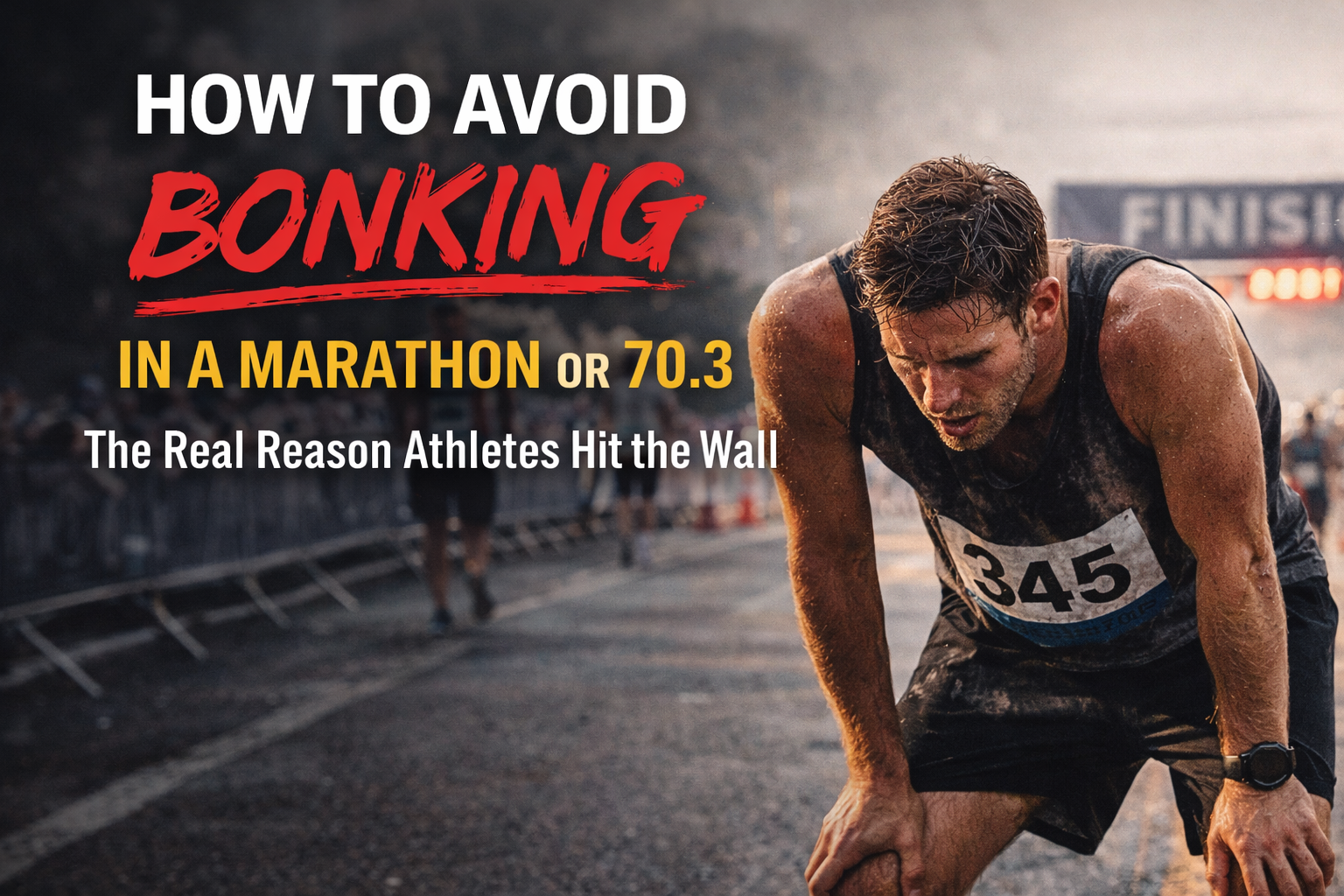
How to Avoid Bonking in a Marathon or 70.3: The Real Reason Athletes Hit the Wall

How to Avoid Bonking in a Marathon or 70.3 Almost [...]
How to Avoid Bonking in a Marathon or 70.3
Almost every endurance athlete has felt it.
Heavy legs.
Brain fog.
Pace collapsing.
That slow-motion unraveling at mile 20 or the final 10K of a 70.3.
That’s bonking.
And it’s rarely about “not being tough enough.”
It’s almost always about glycogen depletion, pacing errors, or under-fueling.
Let’s break down how to avoid bonking in a marathon or 70.3.
What Actually Causes Bonking?
Bonking happens when:
-
Muscle glycogen is depleted
-
Blood glucose drops
-
Carbohydrate intake is too low for intensity
Your body shifts toward fat oxidation — but at race intensity, fat alone cannot sustain pace.
That’s when performance nosedives.
The 3 Primary Causes of Hitting the Wall
1. Starting Too Fast
Adrenaline lies.
If your first 5 miles feel effortless, you’re probably going too hard.
In both marathons and 70.3 races:
Going out 10–15 seconds per mile too fast can cost you 5–10 minutes late.
2. Under-Fueling Early
Many athletes wait until they “feel tired” to take their first gel.
That’s too late.
You should begin fueling within:
-
20–30 minutes of race start
-
Even earlier in longer 70.3 events
Carbs are preventative, not reactive.
3. Poor Carb Intake Per Hour
Research consistently supports:
-
60–75g carbs/hour for marathon
-
60–90g carbs/hour for 70.3
Anything below 40g/hour in long races increases bonk risk significantly.
How to Prevent Bonking in a Marathon
Strategy 1: Pace the First Half Conservatively
Your goal:
Negative split or even split.
If your heart rate spikes early, you’re burning glycogen faster than planned.
Strategy 2: Start Fueling Early
Example Marathon Plan:
-
Gel at 20 min
-
Gel every 30 minutes after
-
Water at aid stations
-
Electrolytes in warm weather
This keeps blood glucose stable.
Strategy 3: Train Your Gut
Most athletes don’t bonk because they can’t consume carbs.
They bonk because they never practiced consuming enough carbs.
During long runs:
-
Practice 60g carbs/hour
-
Simulate race intensity
-
Test sodium intake
Your gut adapts with training.
How to Avoid Bonking in a 70.3
Half Ironman is different because the bike leg determines everything.
Fuel on the Bike
The bike is your best opportunity to fuel aggressively.
Target:
-
60–90g carbs/hour
-
500–800mg sodium/hour
If you underfuel on the bike, the run becomes survival mode.
Don’t Spike Power Early
Overbiking destroys glycogen stores.
Stick to:
-
75–85% FTP for most athletes
-
Controlled output
-
Smooth cadence
Save ego. Save glycogen.
Signs You’re About to Bonk
-
Sudden chills
-
Irritability
-
Tunnel vision
-
Inability to maintain pace
-
Craving sugar intensely
At that point, recovery is slow.
Prevention is easier than correction.
Final Thoughts
Bonking is not weakness.
It’s mismanaged energy.
To avoid bonking in a marathon or 70.3:
-
Pace conservatively early
-
Fuel early and consistently
-
Train your gut
-
Respect carb intake targets
-
Manage bike intensity in triathlon
Endurance racing rewards discipline.
Energy management is performance management.
Share This Article